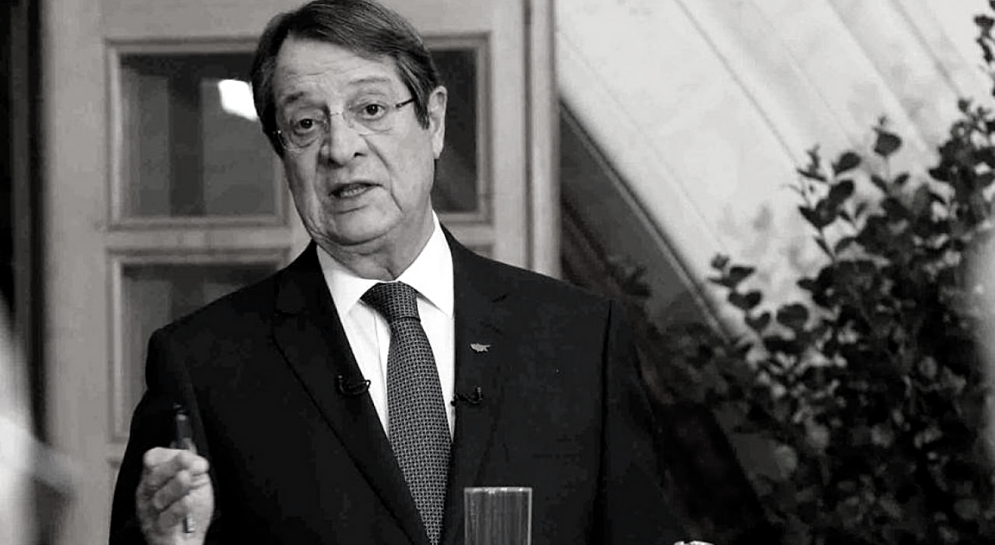

Speech by the General Secretary of AKEL Stefanos Stefanou on the 2026 State Budget
15 December 2025, AKEL C.C. Press Office, Nicosia
Every budget, as a socio-economic tool, reflects the priorities of government policy, as well as the philosophy of the government in power, which determines the relationship between the economy and society.
This is the third budget of the Christodoulides government. And this budget, just like the previous ones, is based on the logic of pursuing a one-dimensional fiscal management with no prospects for society. The repeated pattern of the same policy to be applied simply confirms that the Christodoulides government is more interested in numbers than in citizens and society.
The budget covers the increased operational needs of the state, but does not invest in strengthening social cohesion and improving prosperity. This is because it does not prioritize solving major socio-economic problems: restoring the purchasing power of wages, addressing inflation, inequalities, the housing crisis, high electricity and fuel costs and, more generally, combating the high cost of living. Furthermore, the budget does not provide solutions to the lack of vital infrastructures and means for developing effective social policies.
This is precisely why, while on the one hand Cyprus’ economy is recording fiscal stability and improved indicators, on the other hand social and income inequalities, economic insecurity, and the risk of poverty among the lower-middle strata are increasing. The economy may be improving, but the majority of society is finding life increasingly difficult.
While the key economic indicators are improving, the sustainability of our economic model is among the worst in the EU. We have achieved only two of the UN’s seventeen sustainable development goals.
If we add to all this the weakness, incompetence, or even unwillingness of the Christodoulides government to address these problems through the implementation of specific, holistic policies, then it is easy to see why the problems facing society will continue to feed back and escalate.
The budget does not respond to the needs of society. Nor does it serve a long-term strategy for a sustainable, resilient, and socially oriented economy that ensures the future of the next generations. There is a lack of a vision and strategic planning for an effective and socially just developmental model.
For these reasons, AKEL will vote against the budget this year too.
AKEL’s position is highly political: we disagree with the philosophy, content, and direction of the budget, as well as with the government’s priorities.
We disagree with the government’s socio-economic policy.
We disagree with its tactic of being satisfied and, often praising itself for the performance of the economy without giving any thought—at least—to the stability and sustainability of our developmental model and without understanding the difficulties and problems society faces.
“We are in the best economic situation we have been in for decades,” President Christodoulides recently stated.
But have those in power ever wondered how well people are actually living?
Have they ever put themselves in the shoes of low-income pensioners, low-income workers, and the vulnerable groups of the population who cannot make ends meet?
Have they ever wondered how stressful it is for young people and their families who cannot afford to buy a home because prices are sky-high?
Have they ever thought about how the thousands of borrowers who have lost or are in danger of losing their properties feel, because they are being pressured by the banks and hedge funds?
All the data show that the government ruling forces, as well as the parties that participate in the government, support, or tolerate the government’s policies, lack the sensitivity to understand the difficulties and stress experienced by the lower-middle and middle strata.
Colleagues,
The 2026 budget does indeed record a surplus. However, much of the state’s revenues are not generated by productive investment, but by increased tax revenues resulting from inflation.
Non-productive expenditures are becoming entrenched, and this limits the state’s ability to invest in social and developmental policies.
This is made even more acute by the government’s policy to accumulate reserves instead of strengthening social, green, and digital policies. The economy can do more, but the government chooses not to provide the necessary investments.
The government claims that the €142 million increase in social benefits in the budget is a sign of its social sensitivity. I am sure that this claim will be repeated continuously by the MPs of the pro-government coalition parties during the debate on the state budget. However, if we analyse this increase, we will find that it is mainly due to the €101 million increase in the general government contribution to the General Health System (GESY). Can the remaining €41 million of the increase cover the increased social needs? The answer is no!
The increases registered in social benefits are limited and insufficient to meet the pressing social needs. And things are getting worse as the share of social welfare and housing benefits as a percentage of budget expenditure is decreasing even further. These key social policy tools are underfunded.
The main driver of growth—which is expected to fall slightly from 3.4% in 2024 to 3.1% in 2025—is private consumption, particularly of imported goods.
Productive investment, which is the driving force behind real growth, accounts for only 13%, well below the EU average of 22%. This combination – over-dependence on consumption and low productive investment – is a structural problem that the government does not address in the budget.
A major problem is the low implementation rate of the developmental budget, especially for co-financed projects, which represent the backbone of infrastructure projects. In 2024, the implementation rate was just 61%. If we add to this the fact that major projects are not being completed on time or are stalled, such as the Paphos-Polis Chrysochous road or the project in Vasilikos, then the problem becomes even greater.
However, the most negative factor affecting growth is the fact that the funding of developmental expenditure by Ministries/deputy Ministries that can contribute to social and environmental sustainability (Health, Education, Labour, Agriculture, Research/Innovation/Digital Policy) continues to decline. The total reduction amounts to almost 15% over a five-year period (in 2023, they accounted for 43% of developmental expenditure, in 2026 they will fall to 34% and in 2028 they are expected to fluctuate around 28%).
Spending on infrastructure projects is down 11% and on roads 6%.
Tax revenues account for 80% of total budget revenues. These continue to rely more on indirect taxation (42%) than direct taxation (38%), while the contribution of wealth (i.e., property taxes and capital gains tax) remains at just 2%. Indirect taxes disproportionately affect low and middle income strata, while the low contribution of wealth feeds back and reinforces social and income inequalities.
This social injustice—that is to say, the high contribution of the middle classes and the low contribution of wealth—will not only be perpetuated by the government’s “tax reform,” but will be further reinforced. The government’s proposal for “tax reform” does not affect 50% of society. On the contrary, it leaves them exposed to the squeeze of inflation/expensiveness and indirect taxes.
The claim that there will be no new taxes is a myth. Households are already paying increased taxes due to inflation/expensiveness. In addition, new taxes are just around the corner. These are the so-called “green taxes,” which were proposed and committed to by the DISY government to the EU and have not been withdrawn by the current government. Really, when DISY says “no new taxes,” does it remember that it was its own government that committed itself to imposing “green taxes”? For DISY, the slogan “no new taxes” obviously only applies to wealth and the super profits being registered.
We argue that the distribution of economic burdens should be as fair as possible. This means that wealth and high incomes should be taxed more, while lower income groups should be exempt from tax or receive tax reliefs.
To achieve this socially-oriented goal, we have submitted a series of proposals, including the following:
- Increase the tax-free income threshold to €22,500.
- Changes to tax rates to benefit low and middle incomes.
- Introduction of a new tax rate for very high incomes above €100,000.
- Indexation of tax brackets every three years to reflect new realities.
- Change in the thresholds and amounts for granting tax relief to families.
- Exemption of Provident Funds from income tax.
- Taxation of real estate worth more than €3 million, as proposed by the group that drafted the proposals for tax reform.
- Adopting a sliding scale of fees for large companies based on their assets and/or turnover.
- Taxation of the super profits of the banks and energy companies to finance housing policies and combat energy poverty.
- Permanent reduction of VAT to 5% on electricity, zero VAT on basic necessities (such as baby and maternity items), reduced VAT of 5% for upgrades and extensions to primary residences.
These are some of our proposals for rationalizing the redistribution of the tax burden for the benefit of the many and not the few and the privileged.
Colleagues,
In the new state budget, the rate of increase in expenditure remains higher than the rate of increase in revenue. If this imbalance is not addressed, it will lead to pressure to cut social and development spending.
When talking about the rate of increase in expenditure, it is inevitable to mention dangerous pending issues that threaten the fiscal stability of our country.
One pending issue concerns the natural gas terminal in Vasilikos. This is the project that the Anastasiades-DISY government scandalously awarded to a company that did not have the relevant experience, resulting in so many problems that it was ultimately suspended in July 2024. It is well known that the procedures for the project are being investigated by the European Public Prosecutor’s Office, with the risk that we may indeed lose the European funding.
For a project with a capital cost of approximately €300 million, approximately €500 million has been paid to date for construction, studies, arbitration, and investments (e.g., 6th Cyprus Electricity Authority unit) and, depending on the outcome of the pending issues, the cost may approach €1 billion. If we add to this cost what taxpayers pay in pollutants and expensive electricity, then we can understand the magnitude of the costly legacy left by the DISY Government on the shoulders of taxpayers. We would like to remind you that from 2018 to the first half of 2025, we paid €1.3 billion as a country, which was shifted on to consumers in their bills.
Another thing that’s risky for the budget is the pending issue of Cyprus’ electricity interconnection, the much-talked-about Great Sea Interconnector (GSI), which is also being looked into by the European Public Prosecutor’s Office. The project has been suspended, but the costs are mounting, and the Christodoulides government, through the erroneous agreements it has entered into, has committed our country to obligations amounting to many millions of euros.
The final cost of the GSI is currently estimated at €1.9 billion, but various forecasts put it at up to €3 billion. Even if it is not implemented, taxpayers will be asked to pay a heavy price: €82 million has already been recognized to the Independent Power Transmission Operator (ADMIE), and the suspension of the project could lead to costs exceeding €150 million. And that’s without counting any extra claims from different companies. I’d like to remind you that the main decisions on the Vasilikos and GSI projects were taken during the DISY government. However, despite its many announcements and declarations, the current government has unfortunately not only failed to address the problems but has added more to them.
The government’s excessive borrowing from the Social Insurance Fund also poses a danger to public finances. This has reached €12 billion. In this way, the government obviously wants to show that public debt is decreasing, but in doing so, it is squeezing the reserves of the Social Insurance Fund, and at some point—if the problem is not addressed—its sustainability will be called into question.
Colleagues,
In the budget debate, there is always the danger of getting caught up in the discussion of economic indicators – which are certainly important and must be taken seriously into account – and losing sight of the big picture.
The big picture has to do with the future of our country. This future is threatened by key problems and critical challenges. I will refer to these below:
Important sectors of the economy suffer from the existence of monopolies and oligopolies. This situation undermines competition as it favors the creation of cartels, which usually impose high prices on goods and services at the expense of consumers. Oligopolies exist in the extremely important sectors of banking, energy, retail trade, international transport, public works, and, most recently, health.
I regret to note that the Competition Commission is unable to play its role, while government decisions, such as the continuation of Sunday working, are destroying competition in the retail sector for the benefit of two or three major players in the sector.
Even more dangerous is the phenomenon of foreign capital controlling vital sectors of the country. Banks and credit purchase companies are controlled by foreigners, a large part of the health sector is controlled by foreigners, as are international transport and various sectors of retail trade.
- This phenomenon is linked to another dangerous development: the mass sale of real estate/property to third-country nationals. Apart from the national security issues that arise for a small, isolated, and semi-occupied island such as Cyprus, mass sales have increased real estate prices, making the housing market inaccessible to the lower-middle strata. AKEL has submitted relevant legislative proposals for constraint, control, and transparency in this area, as is the case in the majority of EU member states.
- Cyprus is exposed to energy shortages and insecurity. The failure to implement critical infrastructures, the long delay noted in the arrival of natural gas for electricity generation, and the delay in promoting investment pose enormous dangers not only to the economy but also to our country as a whole.
- This energy situation has trapped households and businesses in extremely expensive electricity and limits the competitiveness of the economy. According to European statistics, Cyprus is the only country in the EU where greenhouse gas emissions in 2023 were higher than those in 1990. This is due to Cyprus’ high dependence on oil and fuel oil, the absence of natural gas and storage, and the ineffective penetration of RES in the energy mix.
- The poor state of the energy sector is linked to climate change and the environmental crisis, which jeopardises the sustainability of the Cyprus economy. According to studies carried out by the Centre for Economic Research, the Cyprus economy remains exposed and vulnerable to climate change, with scenarios of contraction of 8% by 2040 and 25% by 2100. The most vulnerable sectors are tourism and agriculture, particularly due to the consequences of the ongoing water crisis. Even on this crucial issue, the government has no overall plan in place beyond resorting to the fate of the Gods, as the saying goes. The government’s failure extends to the area of waste management, where no plan has been implemented and no targets have been fulfilled.
- A huge problem for the future of our country is the increase in social and income inequalities and the decline in the purchasing power of society. Now, not only the lower-middle strata, but also the middle strata are suffering from the economic pressure created by inflation/expensiveness and the high cost of living. Those in power limit themselves to celebrating economic indicators, provocatively ignoring social indicators, in which Cyprus ranks at the bottom of the EU tables.
And because social indicators usually go unnoticed by the selected privileged few, the ‘princes’, the establishment, the elites, and those in power, I will list a few of them:
- 45% of citizens struggle to make ends meet because their income is insufficient.
- Pensioners in Cyprus are among the poorest in Europe. The poverty rate is 31.5%, while in the EU it is 19.2%. Approximately 100,000 pensioners receive pensions ranging from €415 to €1,000.
- Cyprus is among the countries with the highest number of low-wage earners (20% in Cyprus compared to 14.7% in the EU).
- Working people in Cyprus work significantly more hours than the EU average, but are paid 40% less.
- Average earnings in Cyprus remain consistently 30% below the EU average.
- Four in ten workers are paid less than €1,750 gross, and almost half of them are on the minimum wage.
- Fewer and fewer of our fellow citizens are escaping the risk of poverty, even after receiving social benefits. The rate is currently 12.5%, marking a 10% increase since 2021.
- Four in ten of our fellow citizens cannot cope with unexpected expenses, while one in three cannot afford a week’s vacation.
- Energy poverty is much higher in Cyprus than across the EU, a fact that the government has recently been forced to admit.
- Cyprus lags behind the EU by 15% in social spending on health. It lags behind by 21% in the provision of social protection.
- Cyprus has the worst performance in the EU in terms of disability expenditure (0.6% of GDP in Cyprus compared to 1.9% in the EU).
- For students, average financial support is 60% lower than the EU average.
These and many other factors make life very difficult for the majority of society. And it is made even more difficult by the high cost of living, high electricity and fuel bills, the exorbitant cost of housing, and the many shortcomings of the welfare state.
This situation can only be addressed through specific government policies and measures. Unfortunately, we do not see such political will being demonstrated on the part of the Christodoulides government. Any moves that have been made are fragmented, usually temporary, and ineffective.
The government ruling forces are ignoring the problems. Others, taking advantage of the anger that exists in society and the disdain for political parties observed , simply highlight some of the problems and present them on social media as if they had somehow discovered the unknown. However, they do not propose solutions, nor can they practically promote them.
Problems are not solved by venting anger or by levelling all parties, because not all parties are the same. Problems are solved with the submission of specific and feasible proposals. They are solved through political battles fought where decisions are made. In government offices and in Parliament. This is what AKEL does with consistency, continuity, and combativeness, managing in various cases to achieve results even when the balance of power is negative.
- It was AKEL’s reactions that forced the government not to impose the so-called “green taxes,” which would have further increased the already high cost of energy.
- It was AKEL’s pressure that forced the government to reduce, at least temporarily, the VAT on electricity, even though it had previously reacted by saying that the EU would not allow it.
- It was AKEL’s mobilizations that forced the government to back down from its insistence on imposing the “I pay as I fly” program, which would have further increased the cost of waste management without the state being ready to offer solutions.
- It was the pressure exerted by AKEL with its proposal to tax super profits that forced the government and the banks to admit that there were excessive charges. It was then that the banks were forced to make some concessions, albeit minimal ones. Following the European Commission’s explicit statement that taxing banks’ exorbitant profits does not pose a danger to the banking system and the economy, AKEL has resubmitted its proposal, which seems to be once again disturbing the sleep of the political party bodyguards of the banks. Once again, the political parties will be called upon to show whose side they are on: society’s or the banks’. AKEL was, is, and will remain on the side of society.
AKEL has submitted and asserted for the implementation of many other proposals aimed at protecting society from the arbitrariness of the banks and powerful interests. It has submitted proposals to protect primary family residences from foreclosures. To exempt guarantors from the obligation to pay the balance of loans. To restore effective legal protection in cases of illegal charges and abusive clauses, which was removed by those political parties acting as bodyguards for the banks in 2018. To control the Hedge Funds that have intensified their attack on borrowers’ assets. A tool that was generously offered by the same well-known bodyguards of the banks, allowing them to transfer all their problematic loans there and clean up their portfolios. The banks cleaned up, but the problems with non-performing loans continue to plague society. That is precisely why we are returning to the issue of foreclosures, for which we have submitted specific proposals.
In all these issues concerning the banks, we observe the same pattern: certain parties—mainly DISY and DIKO, with the government as their worthy ally—always vote in favor of the interests of the banks and never in favor of society. Even in the case of the 2013 crisis, these parties, together with the government, exonerate the banks for their crimes that led the country to the Memorandum – as clearly stated by the European Commission in its April 2013 report – and shift the blame elsewhere. For them, the banks come first. That is why they should not take offense when we call them the banks’ bodyguards.
They tell us that ‘you do not want the banks’ and ‘that is why you vote against them’. I reverse the logic: those who consistently vote in favor of the banks are against society.
Colleagues,
Cyprus needs a new model of development that is characterized by stability and dynamic growth. Our developmental vision combines three key components: economic growth, strengthening working people’s incomes, and upgrading the welfare state.
The new developmental model must aim at:
- Sustainable development, a goal that can be achieved by incorporating the factor of environmental change, adapting the economy to the new realities caused by the climate crisis.
- Tackling growing income and social inequalities
- Distributing the economic burden according to each individual’s economic capacity.
- Ensuring quality jobs with rights, dignified wages, and pensions.
- Supporting entrepreneurship, primarily small and medium-sized enterprises, which are the backbone of our economy.
- Protecting the environment from anarchic rampant development.
- Ensuring equality and justice at all levels of economic activity, both in the private and public sectors.
When talking about the key problems and major challenges facing our country, the discussion inevitably turns to the open wound of the Cyprus problem. The continuation of the Turkish occupation and the de facto partition is a permanent source of danger for our country. Recent developments in our region and elsewhere have reaffirmed that conflicts considered frozen can turn into hot ones. We do not have the right to pass this risk on to future generations.
The continuing uncertainty surrounding the Cyprus problem prevents us from taking advantage of opportunities and possibilities for our country. Only a solution to the Cyprus problem and, consequently, the normalization of our relations with Turkey can unleash the potential and possibilities for addressing problems such as energy and water.
For AKEL, it has always been and remains clear that the current situation cannot be an option. It was and remains clear that we cannot abandon our efforts to achieve a solution. We must consistently and persistently seek a solution on the agreed basis of a bi-zonal, bi-communal federation with political equality, as described in the relevant UN resolutions.
Deadlock and stagnation have never been allies of a solution. Nor is the factor of time in favor of a solution. On the contrary! The passage of time serves all those forces and circles who favor the permanent partition of Cyprus. It favors the far-right ELAM, which is raising its head by sowing hatred, fanaticism, and nationalism, all of which brought the destruction of 1974 in Cyprus. The lack of a solution also serves Turkey, which exploits and takes advantage of the impasse to consolidate the de facto partition.
Currently, mobility on the Cyprus problem has intensified due to the verdict of the Turkish Cypriots in the recent vote in the occupied territories. The UN Secretary-General has announced his intention to convene a new Informal Enlarged Meeting to break the deadlock and continue the negotiations from where they left off in 2017.
The Greek Cypriot side must support and assist Mr. Guterres in this effort. We must fully and in a concrete way support the position of continuing the negotiations from the point at which they were interrupted at Crans Montana in 2017, which means that the convergences that have been recorded so far and, more generally, the negotiating acquis must be safeguarded and Mr. Guterres’ Framework must be utilized. In view of the developments expected surrounding the Cyprus problem, the Greek Cypriot side must prepare itself adequately so that it can respond positively to the achievement of the goal of a solution.
For AKEL, the solution is always the top priority on its political agenda. It always strives, through its initiatives, actions, and policies, to create preconditions and positive conditions for achieving and supporting the solution.
A solution that will end the occupation and reunite our homeland and people, Greek Cypriots and Turkish Cypriots.
A solution that will restore the human rights and fundamental freedoms of our people.
In view of these developments, AKEL will intensify this effort. And I would like to take this opportunity to stress once again that AKEL, regardless of the fact that it is in opposition, will support any efforts and initiatives undertaken towards a solution. This is what we have done in the past, and this is what we will do now! For us, Cyprus comes first!
Cyprus is entering 2026 with many open fronts and serious challenges threatening its future. In a particularly unstable region, our country needs seriousness and responsibility, it needs long-term planning, a sustainable economy, and strong social policies. Because at the end of the day, it is citizens who bear the consequences of the policies that are implemented. And it is no coincidence that today the majority of society is suffering and in distress.
Faced with this reality, supporting society and its people is not a choice; it is an obligation. And that is exactly what we are doing and will continue to do as AKEL. This is what we have been doing for a hundred years and this is what we will continue to do: consistently, forcefully, and resolutely. We draw strength from the people and we return this strength to the people to support them, by waging struggles that defend the dignity, justice, and prospects of this country.