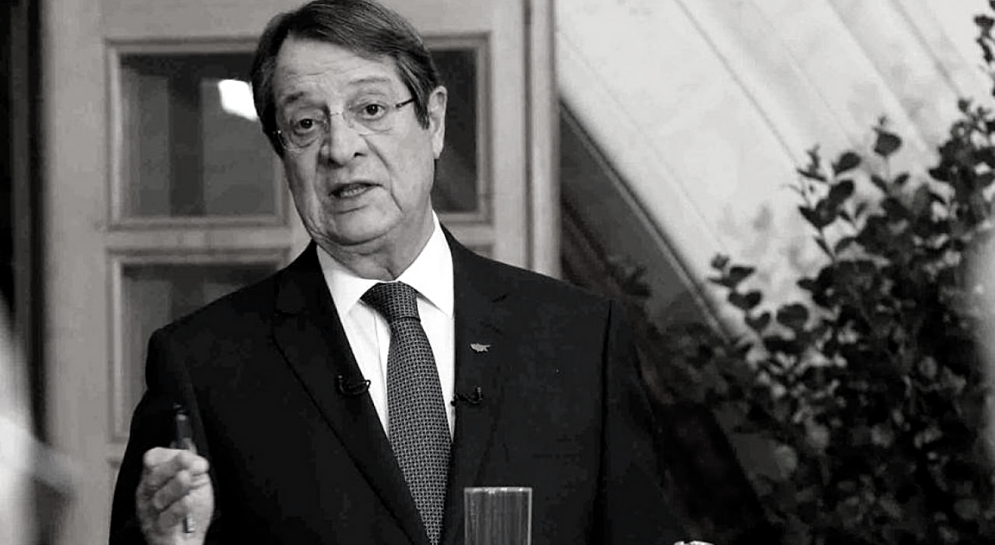
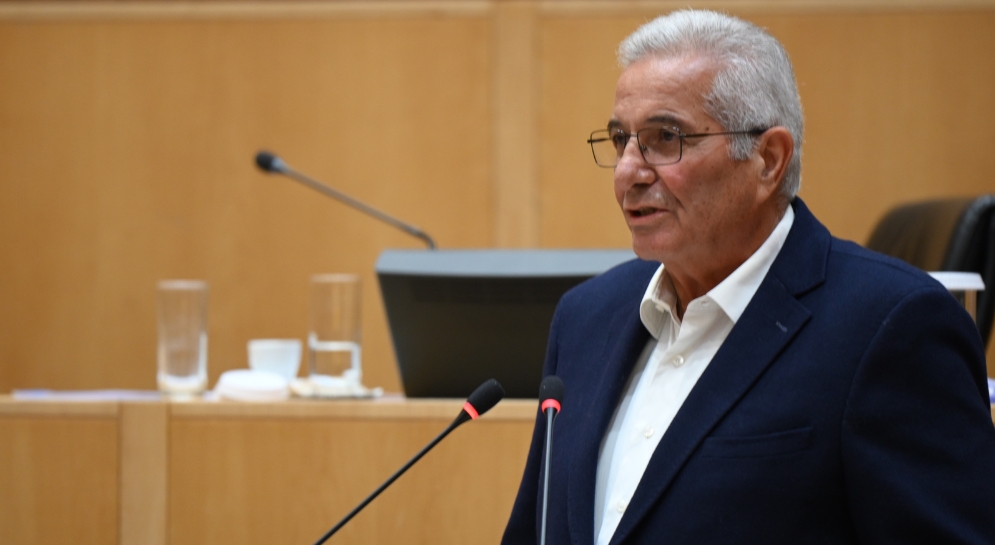
Speech by AKEL MP and former General Secretary of the Party A.Kyprianou during the debate on the state budget for 2026
16 December 2025, House of Representatives
The positions of our Parliamentary Group on the 2026 state budget and our proposals for the economy were presented by the General Secretary of AKEL.
Permit me to focus on certain issues that I consider very important.
The President of the Republic proudly states that his government is changing Cyprus from what it was in the 1960s, implying that the government ruling forces are modernizing and making it more efficient. I will not belittle any changes promoted by the Government or any work it has done. I am sure that my colleagues who support it will list them.
But what are these changes aiming at?
Do they serve the needs of the many?
Do they aim to lead to a more just society, with a humane and friendly character to all living in Cyprus?
Do they instil a sense of security for all citizens?
Do they create conditions where everyone can live with dignity and have their basic needs met?
Do they contribute to the development of values and ideals in society that will allow us to look to the future with optimism and pride?
I accept that there are objective difficulties that would make it difficult for any government to achieve all these and other possible goals. The question that needs to be answered is how have the government’s policies to date affected society?
No matter how much the President boasts that Cyprus is changing, unfortunately, the reality is quite different. The worst thing is that the most fundamental characteristic that determines everything else has not changed: the mindset.
President Christodoulides is imbued with the mindset/mentality that has prevailed among most politicians in the Republic of Cyprus from 1960 to the present day. Namely, that the most important thing is the next election and not the next generation: that the end justifies the means.
This mindset leads to a series of mistakes. Instead of choosing the best of those who supported the President, cronies are chosen, from relatives to associates. The much-touted meritocracy of the pre-election period has been abandoned, as have the commitments to exclude politicians and ensure equal representation of men and women in the Ministerial Cabinet. You deceive people when you promise one thing before the election and do another after the election.
The second main feature of politics in our time is the prevalence of communication games/expediencies over substance. The way in which substance is communicated is important in order to be able to persuade or influence citizens.
However, when communication dominates and there is no substance, it becomes dangerous for the future and prospects of the country and society. Unfortunately, N. Christodoulides and many others have succumbed to this logic.
Intolerant and inhumane ideological concepts have massacred humanity in the past. They have led to the darkest pages of history. Unfortunately, however, people forget easily, with the result that history repeats itself with tragic consequences for the world.
Cyprus is no exception to this rule. The tolerance, not to say support, that the President of the Republic and political parties show towards far-right ELAM will prove traumatic for Cyprus. Racism, xenophobia, and sick nationalism find fertile ground in many countries, including Cyprus. If they prevail, they will be disastrous for our country. As ELAM is attempting to monopolise Cyprus’ relationship with Greece, permit me to say that their positions are being adopted by a Greece in decline. Greece, which brought the light of civilisation to the whole world, had other values and ideals. It aimed to cultivate the universal ideals of peace, solidarity, social justice, non-discrimination, friendship among the peoples and individuals, and democracy.
At this point, I would like to say a few words about the issue that arose concerning the painter G. Gabriel, since I was personally provoked.
Democracy demands respect or at least tolerance for different opinions. We all like to boast and say the well-known phrase, “I disagree with you, but I will defend your right to express your opinion.” However, in reality, we cannot tolerate this. We threaten and insult or label anyone who disagrees with us. We use hate rhetoric, which is a criminal offense. In other words, we do not respect democracy and the law.
But there is another aspect: hypocrisy.
When Muslims attacked the Charlie Hebdo magazine, killing 12 people in Paris, we all said “Je suis Charlie” – I am Charlie too. Of course, back then it was the bad Muslims who attacked, whereas now, in a different way of course, it is the good Christians.
In my mind, things are simple.
Everyone has the right to express themselves, within the law, as they wish. The rest of us have the right to judge and criticize them if we want to, in a civilized manner, as befits a democratic country.
Racism, xenophobia, and nationalism are not consistent with the new and modern approach advocated by N. Christodoulides. Cypriot society in the 1960s had clearer values, principles, and ideals on all these issues.
The attempt to discredit institutions, the lack of transparency, with the most glaring example being the Fund managed by the Commission under the chairmanship of the President’s wife, not only do not change, but badly copy Cyprus in the 1960s.
The increase in crime, with the simultaneous emboldening of criminal elements who commit murders in broad daylight, also makes the comparison with Cyprus in the 1960s even worse.
The phenomena of corruption and the ongoing impunity, the attempt to stigmatize different opinions and diversity, and many other actions, unfortunately do not convince us that Cyprus is changing. On the contrary, it remains stuck in its erroneous past.
Blind adherence to the forging of “regional alliances” that push you to tolerate or even support the ongoing genocide against the Palestinian people is not a modern concept but a shameful, dogmatic, and inhumane approach to contemporary international relations. Cyprus in the 1960s had a more humane face and supported and upheld international law.
In the economic sphere, I want to make it clear from the outset that AKEL was never against entrepreneurship and profit. On the contrary, it always supported the mixed economy system. Where it had and still has strong views is on how the wealth produced should be distributed, stressing that workers made a significant contribution to its production and are entitled to a larger share of it.
Unfortunately, the policies pursued over the last 13 years have widened the gap between the wealthy few and the rest, especially the poor. The findings of a major study on the economy in Cyprus conducted by the European Parliament’s Research Service are depressing. The richest 1% of Cypriots own 33.4% of the wealth.
The richest 10% own 66.8%, while the poorest 50% of Cypriots own only 4.1% of the wealth.
Total expenditure on research and development is 3.5 times lower than the EU average. (0.68% of GDP compared to 2.26%).
Regarding spending on disable persons, we record the worst result across the EU (0.6% of GDP, compared to 1.9%).
Average financial support per student is 60% lower than the EU average (€691 compared to €1,766).
One in two citizens (45.3%) finds it difficult to make ends meet on their income.
We are below the EU average on all indicators. Furthermore, while the EU is moving towards wealth taxation, in Cyprus we demonise AKEL for advocating it. These figures speak volumes about the policies being pursued.
The Cyprus problem
The assumption of the leadership of the Turkish Cypriot community by Tufan Erhürman has created a new situation in Cyprus. This does not necessarily mean that there will be positive developments. For this to happen, political will is needed first and foremost from Turkey, but also from the leaders of the two communities in Cyprus.
The fact that the two leaders met and agreed that the solution will be based on the relevant UN Resolutions is positive. Also positive is that the two leaders agreed on political equality, as interpreted by the UN.
However, we are still a long way from resuming the talks.
It is clear that T. Erhürman is trying to proceed with caution, on the one hand so as not to cause a rift with the Turkish leadership and on the other to ensure that he will yield results. He will be judged along the way, according to the policy he will pursue. Now he needs to be encouraged to work with us within the agreed framework for a solution.
I will not hide the fact that N. Christodoulides’ positions and actions have led me to question his genuine intentions. Nevertheless, I believe that at this stage he should be supported and encouraged to move decisively towards a solution to the Cyprus problem. It is not enough to set the resumption of the talks as a goal. The goal must be a solution to the Cyprus problem. Woe betide us if we do not succeed. The future and prospects of our country and people will be not just bleak but disastrous.
Because references have been made to Crans-Montana and the UN minutes that were recorded, I feel the need to repeat a few things.
During the afternoon bilateral meeting between the UN Secretary-General and Mr. Anastasiades before the final working dinner (at Crans Montana in 20217) he informed him that Turkey was ready to discuss the abolition of guarantees and the right of intervention, provided that we agreed on the other issues. According to the UN notes, N. Anastasiades changed colour and said that this was not enough. He said that all troops should leave immediately. When some parties had previously proposed this position to the National Council, he had dismissed it as unrealistic.
Before the working dinner on July 6, Anastasiades spoke to Turkish Foreign Minister Çavuşoğlu about a two-state solution. At the dinner itself, he questioned what the UN Secretary-General was saying. I appeal to logic and not to emotion or slogans. Given these facts, how did we expect Turkey to reveal its cards? Unfortunately, we did not seek to ascertain whether Turkey’s intentions were sincere. The result was that the UN Secretary-General, the EU, and many others among the international community considered that we were not ready to move forward at Crans-Montana.
Finally, permit me to pose a naive question to those forces and circles who support Mr. Anastasiades’ narrative on what went on at Crans-Montana.
Why did he not react to the Report submitted by the UN Secretary General Guterres in September 2017, which completely exonerates Turkey?
Why did Anastasiades permit it to become an official UN document?
Any researcher will refer to this document to study what actually happened at Crans-Montana. They will read that Turkey came there with the intention of cooperating to overcome differences and reach an agreement.
Why did we permit this to happen if the reality was different?